I kept my job and got my bedroom back. Here's how.
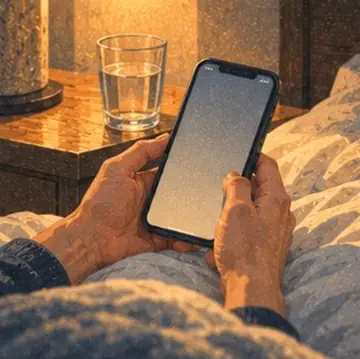
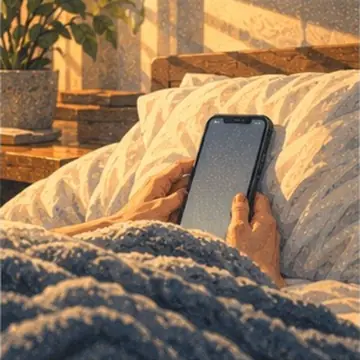
For about nine months, I closed my laptop and my brain stayed at work. I'd lie there, wide awake, in the same room where I'd spent ten hours on calls and email.
I thought it was stress. I thought it was me. It turned out to be the room, and that changed everything I did next.
A bedroom that stops feeling like an office
A guided weekend, one step per screen
Almost thirty things to do the moment the pull to lie down hits
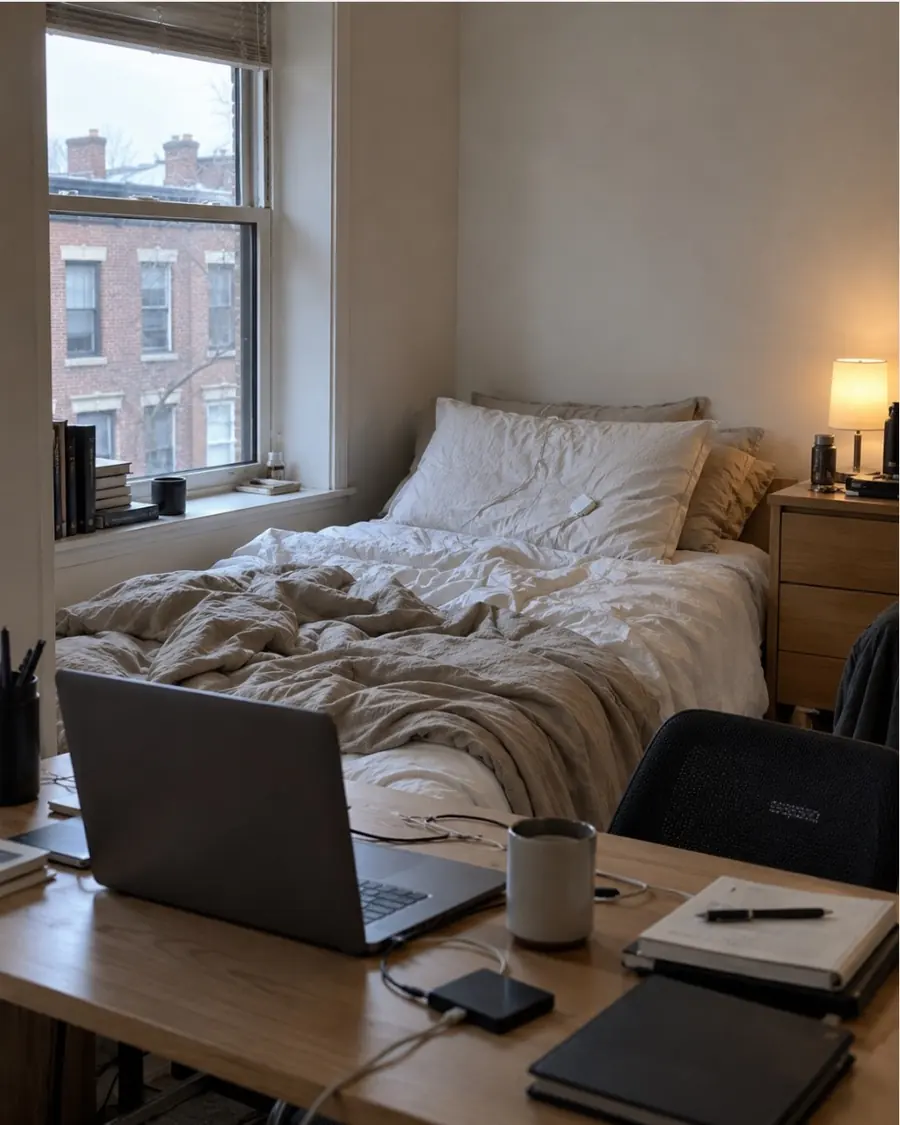
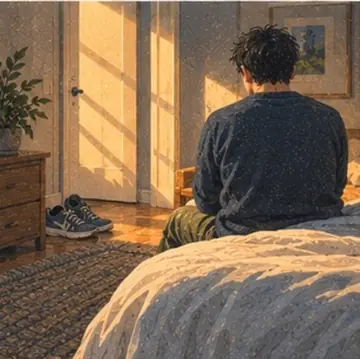
I'm Ori. I live in Baltimore, and in 2020 I worked, ate and slept in a single room. For about nine months, my sleep fell apart.
I'd had bad sleep since I was 26, but this was the worst it had ever been. I'd close the laptop at the end of the day, and my brain would keep working long after I'd stopped.
One room. Desk, bed, and a laptop that never really switched off.
I told myself it was the job, or the screens, or the stress of that year. I never once thought it was the room itself.
So I did what anyone does. I went shopping.
A cabinet full of things that never touched the room
I tried supplements. I tried meditation apps, sleep stories and breathing exercises. A few of them helped a little, which is the most expensive result there is, because it keeps you buying.
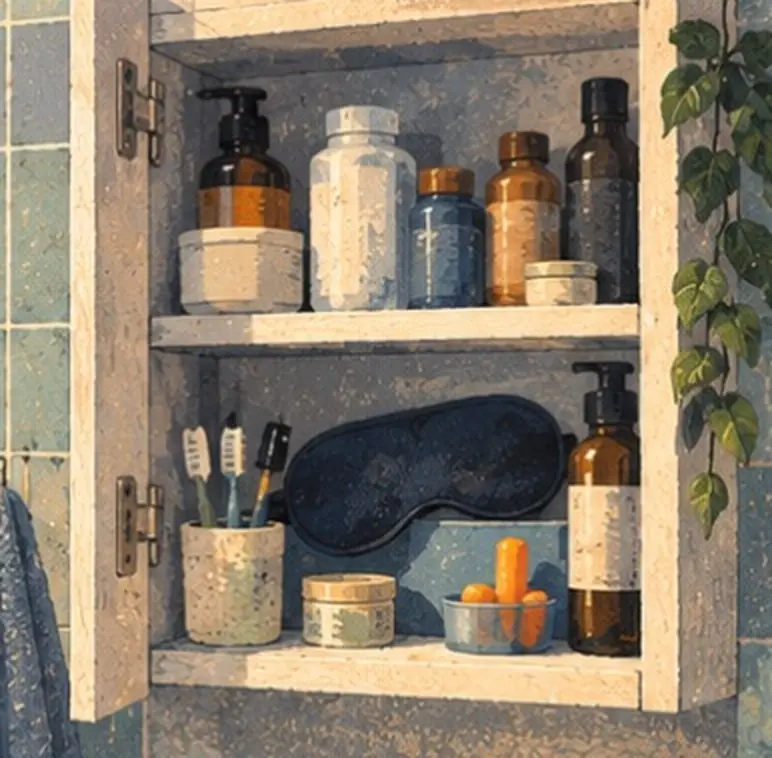
My cabinet in Baltimore. Every bottle was a different bet.
Every one of them worked on me. None of them worked on the room, and I was still sleeping in it.
Then I ran a small experiment, and what I found next made me angry.
What I found made me angry
After my first weekend of resetting, I went looking for studies that explained exactly what I'd just done. I wanted to know why it had worked when nothing else had.
So why had nobody told me? Because you can't put it in a bottle.
Here's what the research says.
What the studies found
The research behind this kind of method
These studies tested behavior-based methods delivered by clinicians, sleep labs and apps. Here's what they found.
52%vs 14%
Time to fall asleep cut, behavior therapy vs a sleeping pill.
Behavior therapy 52%
Sleeping pill 14%
Harvard Medical School, 2004
57%vs 15%
Sleeping normally afterward.
Behavior therapy 57%
Sleeping pill 15%
Harvard Medical School, 2004
42%vs 17%
Meaningful improvement at six months, brief therapy vs standard advice.
Brief therapy 42%
Standard advice 17%
The Lancet, 2023, 642 adults
61%
Good sleepers at six months after a retraining weekend.
Good sleepers 61%
Flinders, 2012
64.6 min
More sleep a night after one "treatment weekend."
64.6 of 100 min
Flinders, 2007
These studies tested clinician-delivered methods, not this product. Full sources are in the book.
The part that surprised me wasn't the numbers. It was why it works.
Your brain files every room by what happens in it
The kitchen means food. The gym means effort. The brain doesn't decide this on purpose, it just files each room under whatever happens there most.
KitchenFood.
GymEffort.
Bedroom-officeAwake.
A room where you've answered emails, joined calls and lain awake for months gets filed under one word, and that word is awake. So when you walk in at night, your brain isn't confused. It's doing exactly what it learned.
That's why the commute used to matter. The walk home was the off switch, and for those of us working from home, nothing sits between the laptop and the pillow now.
I used to think the only answer was a bigger place or going back to the office. It wasn't. The answer was changing what the room means.
And you don't need to move to do it.
Four small changes to the room I already had
I didn't get a bigger place. I changed what my small one said to my brain, with things anyone can do tonight.
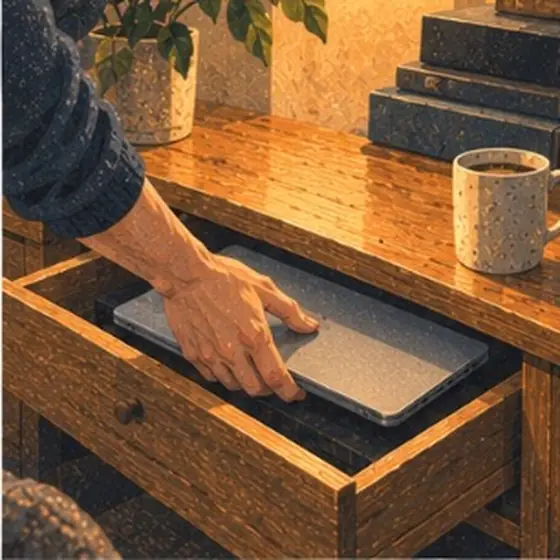
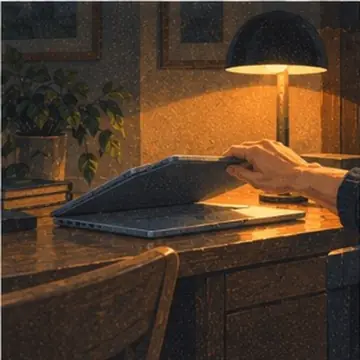
Laptop in the drawerAt the end of the day, the laptop goes in a drawer. Out of sight, so the workday stops sitting at the foot of the bed.
Blanket over the deskA blanket over the desk and monitor. It turns the work corner into furniture.
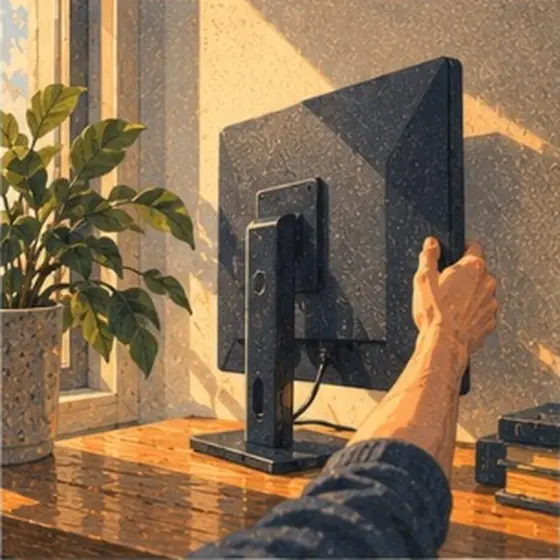
Monitor facing the wallThe monitor turned to face the wall. A dark screen stops looking like a notification waiting to happen.
The fake commuteA ten-minute walk after work, ending at my own front door. It gave my brain the "I'm home" signal the real commute used to give it.
None of this costs money, and none of it needs a bigger room. But I'll be honest, small changes weren't enough on their own, and I'll tell you why.
The method that finally worked has a problem of its own.
The method works. Almost nobody finishes it.
The best-studied behavioral sleep method runs about six weeks. It asks for a sleep diary, daily tracking and rules that leave most people more tired before they feel any better.
Standard method: about 6 weeks
The Simple Sleep Switch: 3 days
Week 123456
And the coached apps that run it charge $297 a month to $2,999 to hold your hand through it. That's a real cost for something most people quit before the good part.
I didn't want to build a better diary. I wanted to build the version people actually finish.
So I kept the two ideas with the strongest research behind them, and I cut the six weeks down to one guided weekend.
Here's how that compares to what's out there.
The two strongest ideas. Three days. $17.
I took the two ideas I trust most and left the rest out. Here's how that stacks up.
Swipe the table to compare all four.
The Simple Sleep Switch
Sleep Reset
Sleepio (SleepioRx, US)
In-person CBT-I
Price
$17
$19 first week, then $297 every 28 days
Set by your health plan
About $261 first session, $228 after
How you pay
One time
Every 28 days until you cancel
Through insurance
Per session
Prescription or clinician needed
No
No
Yes
Yes
Time to complete
3 days
28-day program
6 weeks
4 to 10 weekly sessions
Daily sleep diary
No (a 15-second check-in)
Yes
Yes
Usually
Prices checked October 2026 from each company's site. In-person cost: SLEEP 2025 abstract A246.
I'm not saying the others are wrong. I'm saying a method nobody finishes can't help anyone, and I wanted one you can finish in a weekend.
So what does that weekend actually look like?
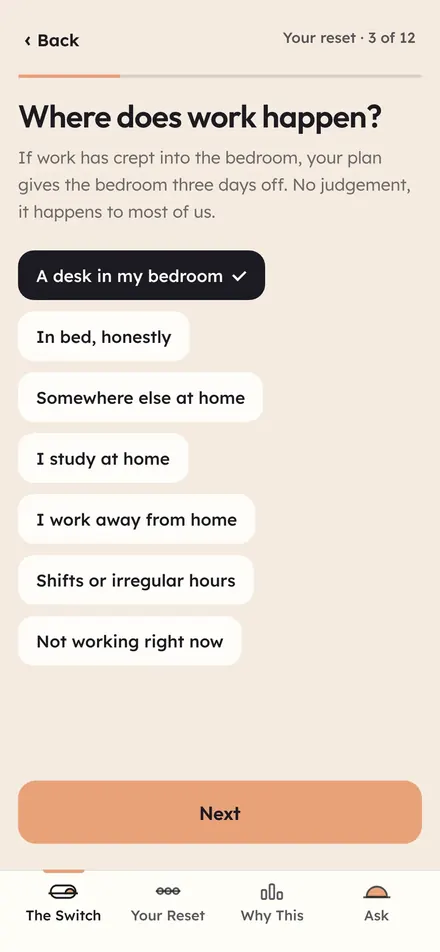
Five steps. One screen at a time.
You're never planning or tracking. The app tells you the next thing, and you do it.
Before
A 2-minute safety check, then about 4 minutes to build your weekend from your own answers.
You start by telling the app about your room.
Day 1
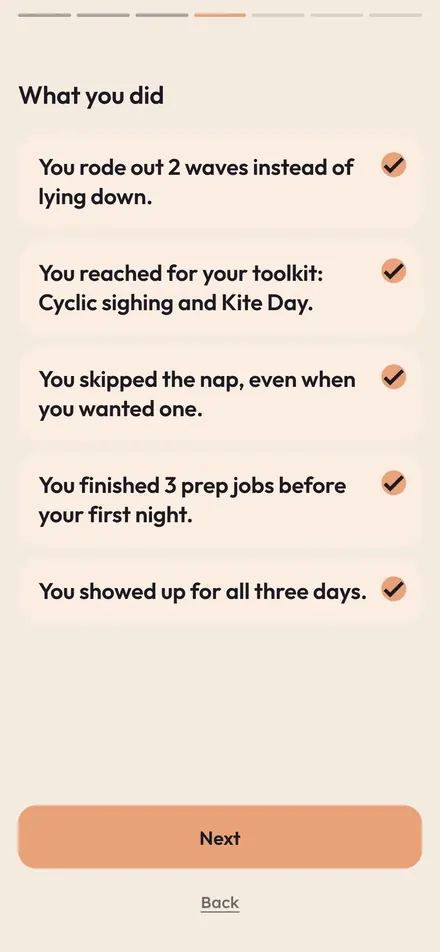
One instruction per screen, with something ready for the moments people usually quit.
One step on the screen. That's all you hold.
Day 2
A 15-second morning check-in, then the same simple rhythm.
Fifteen seconds with your coffee.
Day 3
You finish the weekend. Nothing is sold to you along the way.
The last day. Nothing to buy, nothing to track.
Monday
Your Weekend Report, then Lock It In for workdays with a desk in the bedroom.
Monday. The laptop closes, and the room starts to mean something else.
The hardest moment in all of it is the one I almost didn't get past.
A few of almost thirty
Something to do the second the pull hits
Here's the moment that undoes most people. It's the pull to lie down and give up on the weekend, and it hits right when the plan gets hard.
So I built the Toolkit for that exact moment. It's a few of almost thirty things to do the second the pull arrives.
Cyclic sighing
Two quick breaths in, one long breath out.
Body scan
Your attention moves slowly from your head to your feet.
5-4-3-2-1 grounding
Name what you can see, feel, hear, smell and taste.
Seated muscle release
Tighten and let go, one muscle group at a time, without leaving your chair.
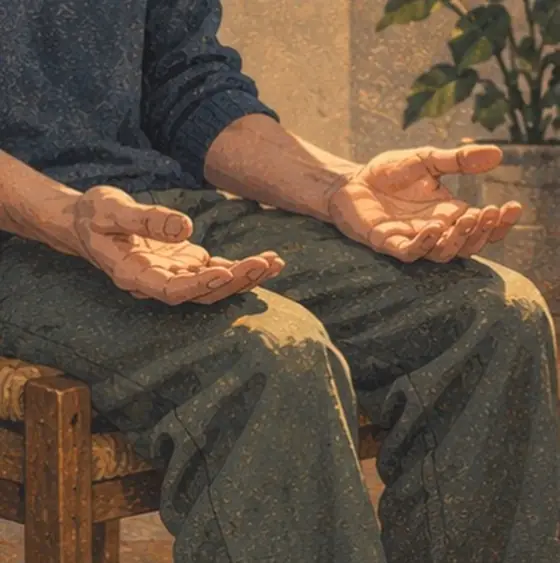
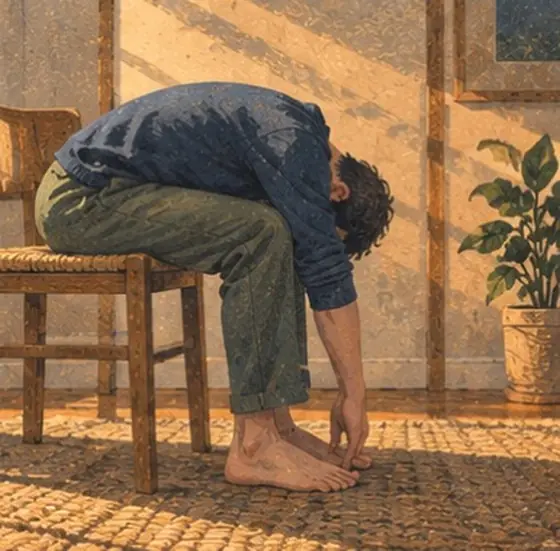
Chair yin stretches
Slow, held stretches that take your shoulders and hips out of desk position.
Walking meditation
A slow walk around the room, one step at a time.
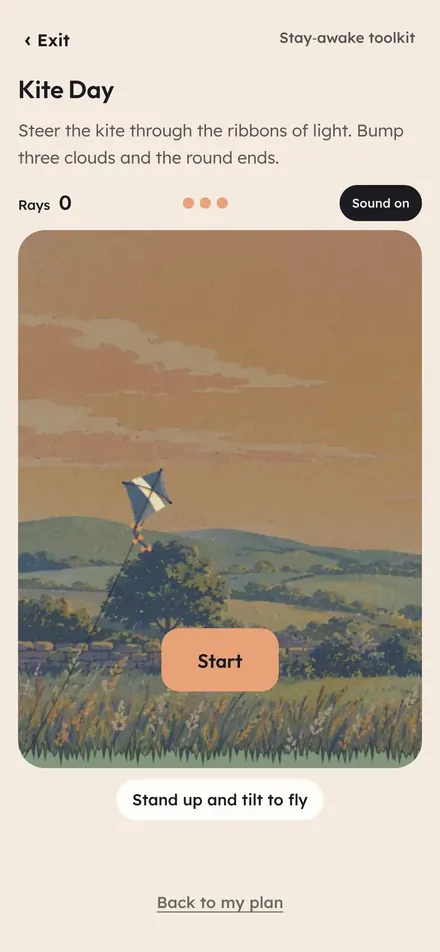
Kite Day Game
A built-in game. Stand up and tilt your phone to steer a kite through ribbons of light.
Birdsong Game
A built-in game. The birds sing a little tune, and you tap it back.
Nothing in the Toolkit promises to make you sleep. It settles your body and carries you through the moment most people quit.
Three screens from the app.
I didn't build this because it was clever. I built it because of one Saturday evening.
The Saturday evening I nearly quit
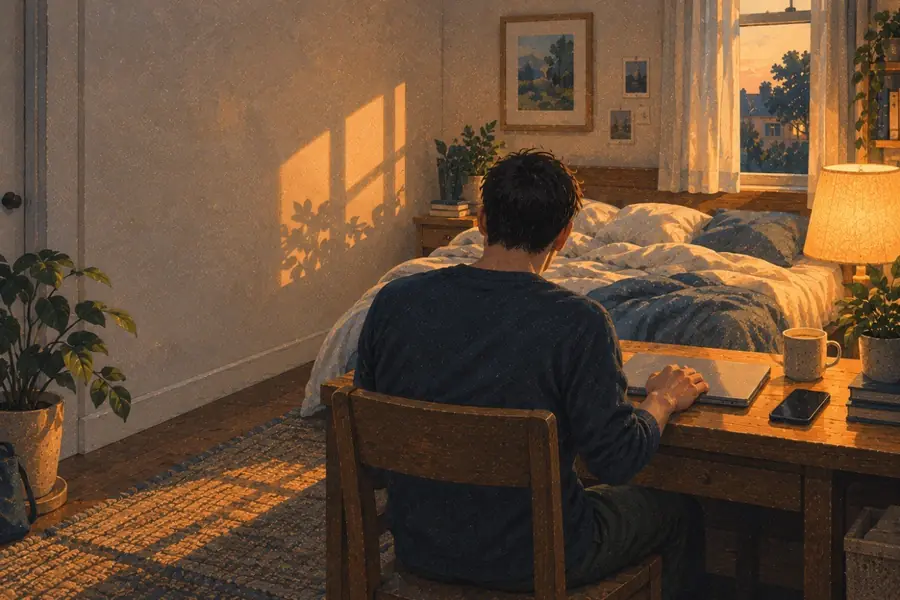
I was in the middle of my own reset when the pull to give up arrived. I sat at my desk, hand flat on the closed laptop, and I thought: this isn't going to work either.
I had a whole cabinet of things that hadn't worked. I wasn't sure why this should be any different.
Saturday evening. This is where I nearly stopped.
I didn't stop, and it wasn't willpower. I had something to do with my hands and my breath instead of lying there arguing with myself, and the moment passed.
That's when I decided to build the app. I wanted to hand people what I'd had to make up on the spot, so they'd finish.
Here's what changed for me on the other side.
Where I was. What changed.
Where I was
What changed
Walking into the bedroom with a knot in my stomach
The dread faded, a little more each night
Mornings that felt like I'd already been at work
Mornings started at home
A brain with no bandwidth at work
The bandwidth came back
Flat, low, slow in conversation
My mood came back with it
My experience, not a promise.
Other things came back too, and I want to tell you what they were.
What better sleep is linked to
Researchers link better sleep with five things I'd stopped expecting from my days. I'm sharing them as research, not as something I can promise you.
Focus
Sharper attention, so deep work stops feeling like pushing through fog.
Mood
A steadier mood, so small things stop landing so hard.
Energy
More energy through the workday, and less reliance on caffeine to fake it.
Patience
More patience with the people around you.
Evenings
Evenings you actually get to enjoy, instead of just recovering.
These links come from general research, not from this product.
If that sounds like something you want back, here's exactly what you get.
Everything you get, for $17
Switch
The Simple Sleep Switch
The Desk Rules
The Partner Briefing
What To Rule Out First
Switch, the guided weekend app. Built from your answers, opens from a link, works offline.
The Toolkit. Almost thirty things to do the moment the pull to lie down hits.
Short texts, a 15-second morning check-in and your Monday Weekend Report.
Lock It In, for keeping the switch flipped on workdays.
Check-ins at Day 8 and Day 15.
The Simple Sleep Switch book: the why, and the sources.
Bonus 1The Desk Rules: how to set up, shut down and hide the workday in a bedroom-office.
Bonus 2The Partner Briefing: a short page for the person you live with.
Bonus 3What To Rule Out First: the physical causes to check before anything else.
Only here, on this page. After you tap the button, you'll get a link to open Switch on your phone.
The 30-day refund
You've already checked who this isn't for. Run your weekend, and if it isn't for you, email me within 30 days for a full refund of your $17. If anything changes once you start, the in-app check will refund you automatically.
Before you decide, here's who this is, and isn't, for.
This is for you if
Your bedroom is also your office
You work from home and want to keep doing it
You've tried the supplements, the apps and the routines
You can clear a weekend, and Monday morning, with no driving or care duties
This is not for you if
You're under 18, pregnant, or doing night feeds or night care
You have epilepsy or a seizure disorder, bipolar disorder, or have ever had psychosis
You snore loudly, stop breathing or wake gasping and haven't been tested, or you have diagnosed sleep apnea and don't use your treatment every night
You sleepwalk, have night terrors, a high risk of falls, a heart condition, uncontrolled blood pressure, a major illness or recent surgery
You take a sleeping pill or tranquilizer most nights, or have three or more drinks most nights
You've nodded off while driving in the last year
You work shifts, or would have to drive or care for someone alone that weekend or on Monday morning
You naturally fall asleep late and sleep fine into the day
If you take prescription medication or have any other medical or psychiatric condition, talk to your doctor first. If you've had thoughts of hurting yourself lately, please talk to someone today.
A few questions I get asked the most.
Questions
Is this CBT-I?
No. It borrows two core ideas from the best-studied behavioral sleep method and runs them in a short, guided weekend. It isn't therapy.
Do I download anything?
No. Switch opens on your phone from a link, and after the first load it works offline.
What if I share a bed?
That's fine. The Partner Briefing gives them a short page so they're on your side.
What if something feels wrong during the weekend?
"Something feels wrong" is on every screen and tells you what to do straight away, including when to stop.
What if one weekend isn't enough?
Your Day 15 check-in compares where you are to where you started. If nothing has changed, it points you to proper, free help.
Is anything recurring?
No. $17 once, and nothing is sold to you during your weekend.
One last thing before you go.
One weekend. Keep the job. Get the room back.
I spent nine months blaming myself, my job and my screens. It was the room, and the room is something you can change without moving.
You already know what the cabinet can't do. This is built for the room.
P.S. In the Harvard study, a short course of this kind of behavior change beat a sleeping pill. This is built on the same two core ideas, run in one guided weekend, and if it isn't for you, you get your $17 back.
Educational only. Not medical advice, and not a diagnosis or treatment for any condition. Describes one person's experience; results vary. Studies cited tested these methods as delivered by clinicians, sleep labs and apps, not this product. Not suitable for everyone: the safety check asks first. No driving or safety-critical work during the weekend or on Monday morning. Talk to your doctor first if you have a medical or psychiatric condition or take prescription medication.
This isn't for everyone, and I'd rather you know before you pay. Do any of these apply to you?
Under 18, pregnant, or doing night feeds or night care.
Epilepsy or seizures, bipolar disorder, or any history of psychosis. Loud snoring, stopping breathing or waking gasping and never tested, or diagnosed sleep apnea and not using your treatment every night.
Sleepwalking or night terrors, a high risk of falls, a heart condition, uncontrolled blood pressure, a major illness or recent surgery. A sleeping pill or tranquilizer most nights, or three or more drinks most nights.
Nodded off while driving in the last year. Shift work, or having to drive or care for someone alone this weekend or Monday morning. Naturally falling asleep late and sleeping fine into the day.
Thanks for being straight with me. This one isn't the right fit for you right now, and you haven't been charged.
If you have a medical condition, or you take medication, a conversation with your doctor is the best next step. They can look at your sleep with the full picture in front of them.
If you've had thoughts of hurting yourself lately, please talk to someone today. In the US, you can call or text 988 at any hour.